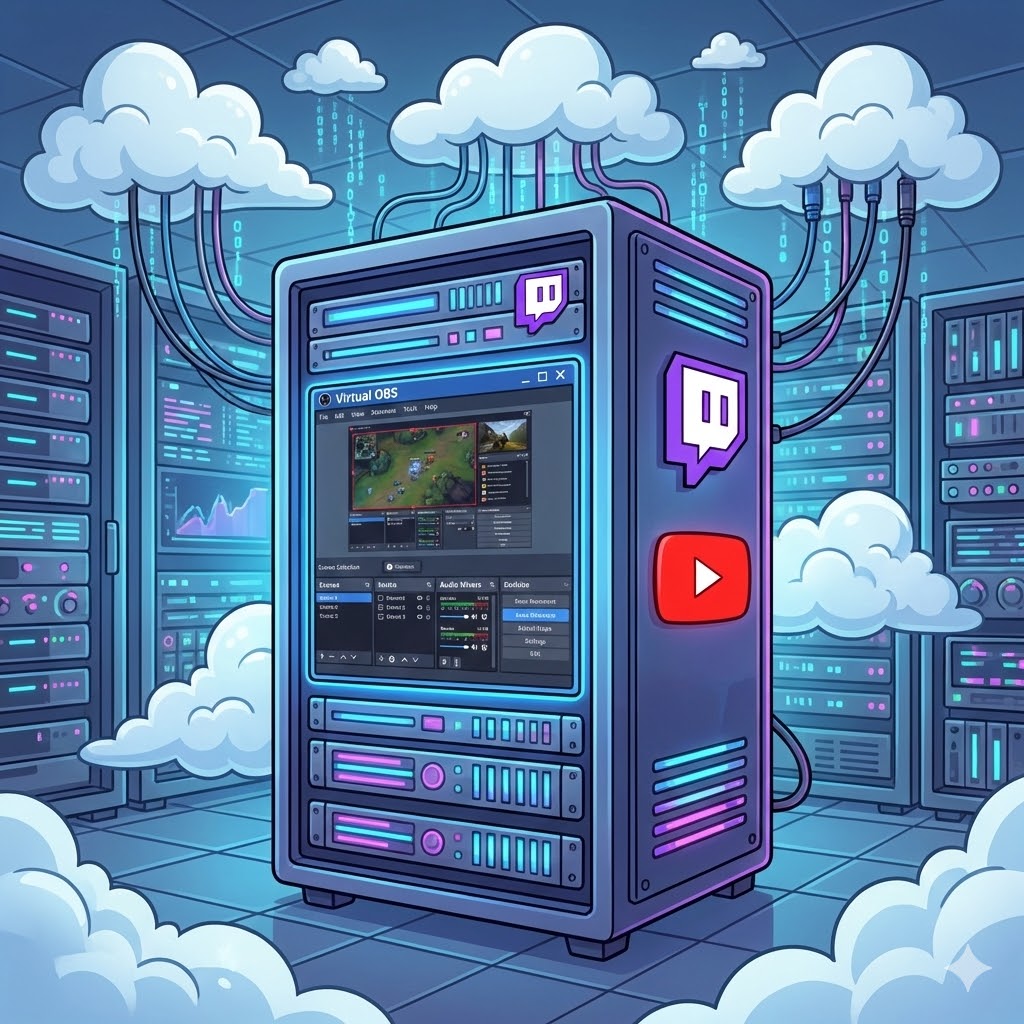
"Stream like a professional broadcast studio, without the hardware costs."
If you've been streaming from your personal computer using OBS (Open Broadcaster Software), you've likely experienced the challenges that come with it: high CPU usage, internet instability, and the risk of your stream going down if your computer crashes. Cloud streaming servers offer a professional alternative that separates your streaming infrastructure from your local hardware.
What is a Cloud Streaming Server?
A cloud streaming server is a dedicated virtual machine hosted in a data center that handles all your streaming operations. Instead of your personal computer encoding and transmitting your stream to platforms like Twitch or YouTube, a cloud server takes over this responsibility. Your computer only needs to send your video feed to the cloud server, which then processes and distributes it to your streaming destinations.
With StableKit, you get access to Google Cloud-powered virtual machines specifically optimized for live streaming. These servers run 24/7, providing enterprise-grade reliability for your broadcasts.
Key Benefits Over Streaming from Your PC
1. Reduced Hardware Strain

When you stream directly from your PC, OBS competes with your games and applications for system resources. This can cause frame drops in your game, stuttering in your stream, or both. With a cloud server, your computer only sends a video feed, freeing up your CPU and GPU for what matters most - your content.
2. 24/7 Uptime and Reliability
Cloud servers run independently of your local setup. If your computer crashes, needs a restart, or loses internet momentarily, your cloud server continues running. This is particularly valuable for:
- Long-duration streams (24-hour charity events)
- Restreaming to multiple platforms simultaneously
- Running continuous broadcast schedules
- Maintaining a "Starting Soon" or "BRB" screen while switching setups
3. Consistent Upload Bandwidth
Home internet connections can be unstable, especially during peak hours. Cloud servers are hosted in data centers with enterprise-grade internet connections, ensuring consistent upload speeds and lower latency to streaming platforms. Your stream quality becomes independent of your home ISP's performance.
4. Multi-Platform Streaming
Want to stream to Twitch, YouTube, and Facebook simultaneously? Your home upload bandwidth would need to support multiple outgoing streams. A cloud server can handle this easily, taking your single input and distributing it to all your destinations without any additional strain on your home network.
5. Professional Production Capabilities
Cloud servers enable advanced production features that would be difficult or impossible with a single PC setup:
- Accept feeds from multiple remote guests or cameras
- Mix multiple video sources before sending to platforms
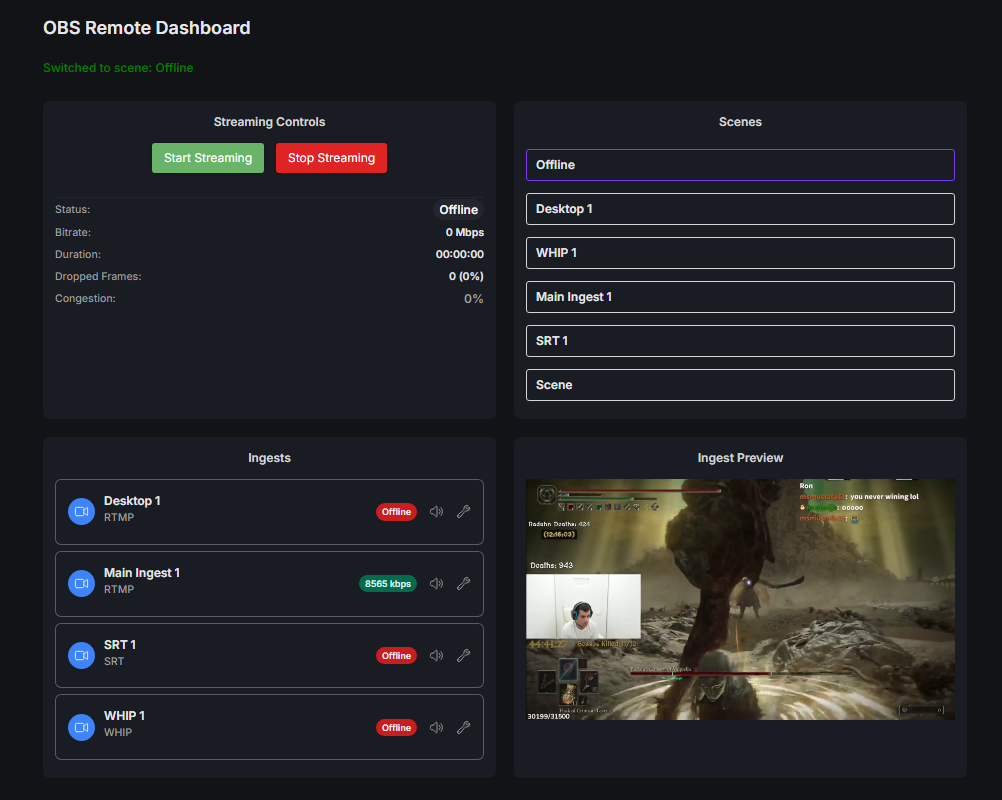
- Use different ingest protocols (RTMP, SRT, WebRTC, WHIP) based on your needs
- Share access with your production team
When Should You Consider a Cloud Server?
Cloud streaming servers are ideal if you:
- Stream regularly and want professional reliability
- Play resource-intensive games while streaming
- Need to stream to multiple platforms at once
- Run long-duration or 24/7 streams
- Want to collaborate with remote guests or co-streamers
- Experience inconsistent home internet quality
Getting Started with StableKit
StableKit makes cloud streaming accessible with managed Google Cloud servers and a simple subscription model. You don't need to configure virtual machines or manage server software - we handle the infrastructure so you can focus on creating content.
Conclusion
Cloud streaming servers represent the next evolution in live streaming technology. By offloading your streaming workload to dedicated cloud infrastructure, you gain professional-grade reliability, better performance, and more creative possibilities. Whether you're a growing streamer looking to level up your production quality or a professional broadcaster needing enterprise reliability, cloud servers provide the foundation for serious streaming.